Universitas Gadjah Mada Departemen Farmakologi dan Terapi
Fakultas Kedokteran Kesehatan Masyarakat dan Keperawatan
Universitas Gadjah Mada
  • Home
  • Tentang Kami
    • Sambutan
    • Sekilas Pandang
    • Sejarah
    • Visi & Misi
    • Struktur Organisasi
    • Divisi
      • Farmakoepidemiologi, Farmakovigilans, dan Farmakoekonomi
      • Farmakogenomik, Farmakologi Molekuler, dan Imunofarmakologi
      • Farmakologi Klinik, Farmakologi Komunitas, dan Regulatori
      • Farmakotoksikologi dan Pengembangan Obat
      • Etnofarmakologi dan Farmasi Kedokteran
    • Staf
  • Pendidikan
    • Program Sarjana
    • Program Pasca Sarjana
      • Praktikum In Vitro
    • ALUMNI PASCA SARJANA
  • Penelitian
    • Publikasi dan Penghargaan
    • Alur Perijinan Pengujian
    • Alur Perijinan Penelitian
    • Video Penelitian
    • Prosiding Seminar “Peran Herbal untuk Mencegah Proses Degenerasi”
  • Fasilitas
    • Daftar Harga Layanan
    • Alat High Performance Liquid Chromatography
    • Alur Penggunaan Fasilitas Laboratorium
    • Laboratorium Farmakogenetika
    • Laboratorium Kultur Plasmodium sp.
    • Laboratorium Kultur Sel
    • Laboratorium Pendidikan
    • Uji Toksisitas Akut Oral
    • Uji Toksisitas Subkronik Oral
    • Unit Pemeliharaan Hewan Coba
    • Perpustakaan Departemen Farmakologi dan Terapi
    • Buku Karya Dosen
  • Kegiatan
    • Pelatihan
    • Seminar dan Kursus
    • Pengabdian Masyarakat
  • Pusat Kedokteran Presisi
  • Kontak Kami
  • Beranda
  • Pos oleh
  • page. 13
Pos oleh :

admin

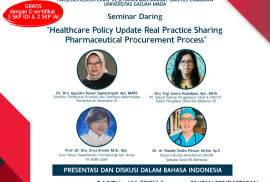
Healthcare Policy Update Real Practice Sharing Pharmaceutical Procurement Process

Berita Friday, 28 April 2023

LATAR BELAKANG

Obat merupakan salah satu komponen utama upaya pelayanan kesehatan. Hal ini berlaku di fasilitas kesehatan tingkat pertama (FKTP) dan juga di fasilitas pelayanan kesehatan rujukan tingkat lanjut (FKRTL). Tersedianya akses obat secara luas dan murah bagi sebagian besar masyarakat merupakan salah satu indikator penting upaya pelayanan kesehatan. Obat perlu dikelola secara efektif dan efisien agar dapat mencapai sasaran seperti yang diharapkan. Bagian pengadaan dan instalasi farmasi fasilitas kesehatan sering dihadapkan pada tantangan seperti obat apa saja yang harus disediakan, berapa banyak yang dibutuhkan, bagaimana memperkirakan kebutuhan obat di berbagai populasi, dan bagaimana menjamin mutu dan keamanan obat bagi setiap individu penggunanya. read more

Buku “Pedoman Dasar Penulisan Resep Dokter untuk Pasien Anak”

Buku Thursday, 26 May 2022

Mengapa penulisan resep untuk pasien anak perlu dibahas khusus? Apakah tidak sama dengan menuliskan resep bagi pasien dewasa?

Resep dokter merupakan alat komunikasi antara dokter dengan apoteker untuk memberikan obat kepada pasien secara tepat agar terwujud pengobatan yang rasional dan mencegah kesalahan pengobatan (medication error). Untuk itu penulisan resep khususnya untuk pasien anak hendaknya dikuasai oleh seorang dokter dan mahasiswa calon dokter. Resep yang benar dan rasional haruslah memenuhi 5 tepat, yaitu tepat obat, tepat dosis, tepat bentuk sediaan, tepat waktu pemberian dan tepat penderita. Penulisan resep untuk pasien dewasa dan anak tidak berbeda jauh, namun anak bukanlah miniatur orang dewasa sehingga penetapan dosis dan bentuk sediaan yang diberikan perlu benar-benar diperhatikan. Kesalahan dalam penetapan dosis yang ditulis dalam resep berakibat fatal bahkan kematian. Ketidaktepatan dalam pemilihan bentuk sediaan yang sesuai untuk pasien anak akan mempengaruhi ketaatan dalam penggunaan atau konsumsinya. read more

Real-World Data and Real-World Evidence in Pediatrics: Case Studies of Pneumococcal Vaccine and Tuberculosis in Children

Berita Thursday, 10 March 2022

Background

Real-World Data (RWD) are data relating to patient health status and/or the delivery of health care routinely collected from a variety of sources. Real-World Evidence (RWE) is the clinical evidence about the usage and potential benefits or risks of a medical product derived from analysis of RWD. RWD can be analyzed to produce RWE on the usage and/or benefits and risks of a medication or a medical product. RWD and RWE offer the possibility to bring about novel insights on patients’ clinical care, regulatory decision-making, and health technology assessment. Detailed information on data sources, data standards, data reliability, how to generate evidence, and regulatory considerations can be found on FDA’s document titled Framework for FDA’s Real-World Evidence Program (U.S. FDA, 2018). RWE has the potential to supplement information derived from clinical trials, providing accessible data in a shorter time and at lower costs. This is especially relevant to pediatrics, where the evidence base to guide medication use in children may be insufficient. Studies using RWD offer the opportunity to assess long-term effects and the safety of medications that are used to treat pediatrics population (Lasky et al., 2020).

In the first session of this meeting, we discuss the pneumococcal conjugate vaccine. Since 2006, WHO has recommended that all countries should incorporate pneumococcal conjugate vaccines in routine immunization schedules for children aged less than 2 years and has prioritized their introduction in countries with high child mortality rates and/or high rates of human immunodeficiency virus (HIV) infection (Bangham et al., 2013). This session will be dedicated to results from clinical trial and the evidence from a study in Indonesia.

Second session discuss the topic of tuberculosis (TB) in children. Pediatric TB deserves prompt identification and treatment because children are at a significantly higher risk than adult of developing the active form of the disease (Tersigni et al., 2021). This second webinar session will focus on the evidence from clinical trial and the results from real-world studies for TB treatment in children.


Objectives

The goal/objectives of this online meeting include:

  • Increase understanding and awareness of the importance of real-world data and real-world evidence to improve quality in healthcare services, especially in daily clinical practice.
  • Providing an example of real-world data and real-world evidence in the vaccine development of pneumococcal conjugate vaccine and the treatment of TB in children.
  • Sharing valuable information on methodologies of clinical trial and real-world studies related to the vaccine development of pneumococcal conjugate vaccine and the treatment of TB in children.
  • Discuss the potential for further research in pneumococcal conjugate and the treatment of TB in children.
  • read more

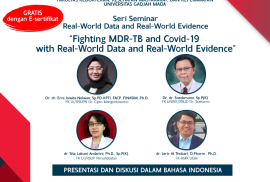
    Fighting MDR-TB and COVID-19 with Real-World Data and Real-World Evidence

    Berita Friday, 4 February 2022

    Background

    Real-World Data (RWD) are data relating to patient health status and/or the delivery of health care routinely collected from a variety of sources. Real-World Evidence (RWE) is the clinical evidence about the usage and potential benefits or risks of a medical product derived from analysis of RWD. RWD can be analyzed to produce RWE on the usage and/or benefits and risks of a medication or a medical product. RWD and RWE offer the possibility to bring about novel insights on patients’ clinical care, regulatory decision-making, and health technology assessment. Detailed information on data sources, data standards, data reliability, how to generate evidence, and regulatory considerations can be found on FDA’s document titled Framework for FDA’s Real-World Evidence Program (U.S. FDA, 2018). Randomized Controlled Trials have limited external validity since the results from a study conducted in a specially selected homogeneous patient subpopulation, and carried out under ideal circumstances, may not necessarily extend well to the general (heterogeneous) patient population with complex care needs, multiple comorbidities, or concomitant medications (Katkade et al, 2018).

    In this two years, the COVID-19 pandemic has further fueled real-world evidence analyses. COVID-19 also accelerated decision makers’ use and understanding of real-world evidence. Additionally, the gathering of RWE is the tenet of successful contact tracing, enabling us to understand and act quickly to manage and extinguish disease outbreaks. Practices such as social distancing, mask wearing, and hand washing have been informed mostly by data sources other than clinical trials (Khan and Pizzi, 2020).

    In the first session of this webinar, we discuss the treatment of multi drug resistant tuberculosis (MDR-TB) using evidence from clinical trials worldwide and results of real-world study. Non-randomized, observational data and real-world evidence have a role to play in the development of policy recommendations on TB treatment by complementing Phase 3 trials in:

    • addressing feasibility, acceptability, delivery strategies, and quality of life issues;
    • generating data on special populations not customarily enrolled in clinical trials;
    • evaluating safety and effectiveness in broader, more diverse populations; and
    • providing additional data on post-marketing toxicities and adverse events (WHO, 2021).

    Second session discuss the topic of vaccine for COVID-19. This second webinar session will focus on the evidence from clinical trial in Indonesia and the results from real-world studies around the world in COVID-19 vaccine. Many RCTs evaluating treatments and vaccines for COVID-19 are already in progress but the number of clinical questions of interest greatly outpaces the available resources to conduct RCTs. Therefore, there is growing interest in whether nonrandomized real-world evidence (RWE) can be used to supplement RCT evidence and aid in clinical decision making (Franklin et al., 2021).


    Objectives

    The goals/objectives of this online meeting include:

  • Increase understanding and awareness of the importance of real-world data and real-world evidence to improve quality in healthcare services, especially in daily clinical practice.
  • Providing an example of real-world data and real-world evidence in the treatment of MDR-TB and COVID-19 vaccine.
  • Sharing valuable information on methodologies of clinical trial and real-world studies related to the treatments of MDR-TB and COVID-19 vaccine.
  • Discusses the use of real-world data and real-world evidence and the exciting potential for further research in MDR-TB and COVID-19 vaccine.
  • read more

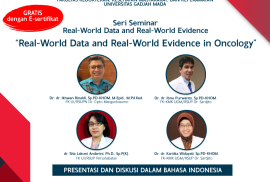
    Real-World Data and Real-World Evidence in Oncology

    BeritaSeminar-Workshop Wednesday, 22 December 2021

    Background

    Data related to patient health status and/or the delivery of health care routinely collected from a variety of sources have been defined as Real-World Data (RWD) by the FDA. On the other hand, Real-World Evidence (RWE) is described as clinical evidence about the usage and potential benefits or risks of a medical product derived from an analysis of RWD. RWD and RWE offer the possibility to bring about novel insights on patients’ clinical care, regulatory decision-making, and health technology assessment. Detailed information on data sources, data standards, data reliability, how to generate evidence, and regulatory considerations can be found on FDA’s document titled Framework for FDA’s Real-World Evidence Program (U.S. FDA, 2018). In oncology, RWE refers to evidence derived from the use and analysis of real-world data, which are data obtained outside the context of conventional randomized controlled trials (Khozin et al., 2017).

    Traditionally, physicians have relied heavily on clinical evidence most notably from randomized controlled trials to guide their clinical decision making. Nowadays, clinicians have access to a wealth of additional data generated from sources outside traditional research settings, such as remote monitoring devices, wearables, disease registries, electronic health records, and claims and billing activities. Data obtained from these electronic health records, cancer registries, and other RWE sources can produce valuable insights into treatments and clinical outcomes in daily practice.

    Randomized clinical trials and RWE are complementary, and the area of Oncology especially benefits from RWE to guide clinical decision making across the patient journey. Key benefits include cancer screening and diagnosis, optimal treatment choices (including personalized medicine) and disease management such as dosing and treatment of side effects (Petracci et al., 2021). The capability of RWE to create a more robust view of the benefits and risks of oncology treatments among all patients eligible for therapy is critically important. It can complement, augment, and extend our understanding of when and how to use new treatments while offering longer-term insights that can drive continued medical innovation (Christian, 2021).

    In this webinar, we discuss the treatment of chronic myelogenous leukemia (CML) with Imatinib using evidence from clinical trials worldwide and results of real-world study in Indonesia. Another session is dedicated to lung cancer with focus on Afatinib and Gefitinib. These two drugs are included in The National Comprehensive Cancer Network (NCCN) recommendations for Non-Small Cell Lung Cancer (NSCLC) with Epidermal Growth Factor Receptor (EGFR) Mutations.


    Objectives

    The goal/objectives of this online meeting include:

  • Increase understanding and awareness of the importance of real-world data and real-world evidence to improve quality in healthcare services, especially in daily clinical practice.
  • Providing an example of real-world data and real-world evidence in oncology.
  • Sharing valuable information on methodologies of clinical trial and real-world studies related to oncological treatments.
  • Discuss the use of real-world data and real-world evidence and the exciting potential for cancer therapy.
  • read more

    1…111213

    Recent Posts

    • Riset Mandiri Berbuah Prestasi, Mahasiswa MIB Farmakologi FK-KMK UGM Raih Juara 1 Poster Competition di Ajang Precision Oncology
    • Mahasiswa Magister Ilmu Biomedik Minat Farmakologi Raih Juara 1 Poster Presentation di International Postgraduate Symposium (IPGS) 2026
    • Tingkatkan Kompetensi Teknisi, Departemen Farmakologi dan Terapi Selenggarakan Pelatihan Pengoperasian dan Optimasi HPLC
    • Akselerasi Riset Obat Alami, Departemen Farmakologi dan Terapi serta Pusat Kedokteran Herbal UGM Gelar Pelatihan Cell-Based Assays
    • Partisipasi Dosen Departemen Farmakologi dan Terapi pada Program Research Internship dan Summer School of Global Health, University of Groningen
    Universitas Gadjah Mada

    Departemen Farmakologi dan Terapi

    FAKULTAS KEDOKTERAN KESEHATAN MASYARAKAT DAN KEPERAWATAN

    Gedung Radioputro, Lt 2, Sayap Timur

    Jalan Farmako, Sekip Utara, Yogyakarta, 55281

    Telp (0274) 511103 Fax (0274) 511103

    Email: farmakologi.fk@ugm.ac.id

    © Farmakologi FKKMK Universitas Gadjah Mada

    KEBIJAKAN PRIVASI/PRIVACY POLICY